

Or Weis
Announcing Permit MCP Gateway
Announcing Permit MCP Gateway, a new trust and enforcement layer for MCP that brings identity, consent, fine-grained authorization, auditability, and runtime control to AI agent actions.
Read more
Featured Stories
Or Weis
Announcing Permit MCP Gateway, a new trust and enforcement layer for MCP that brings identity, consent, fine-grained authorization, auditability, and runtime control to AI agent actions.

Gabriel L. Manor
The new Permit.io CLI brings developer-first workflows to access control. Define, test, deploy, and enforce fine-grained authorization using AI, CI/CD, GitOps, and OpenAPI — all from your terminal
Or Weis
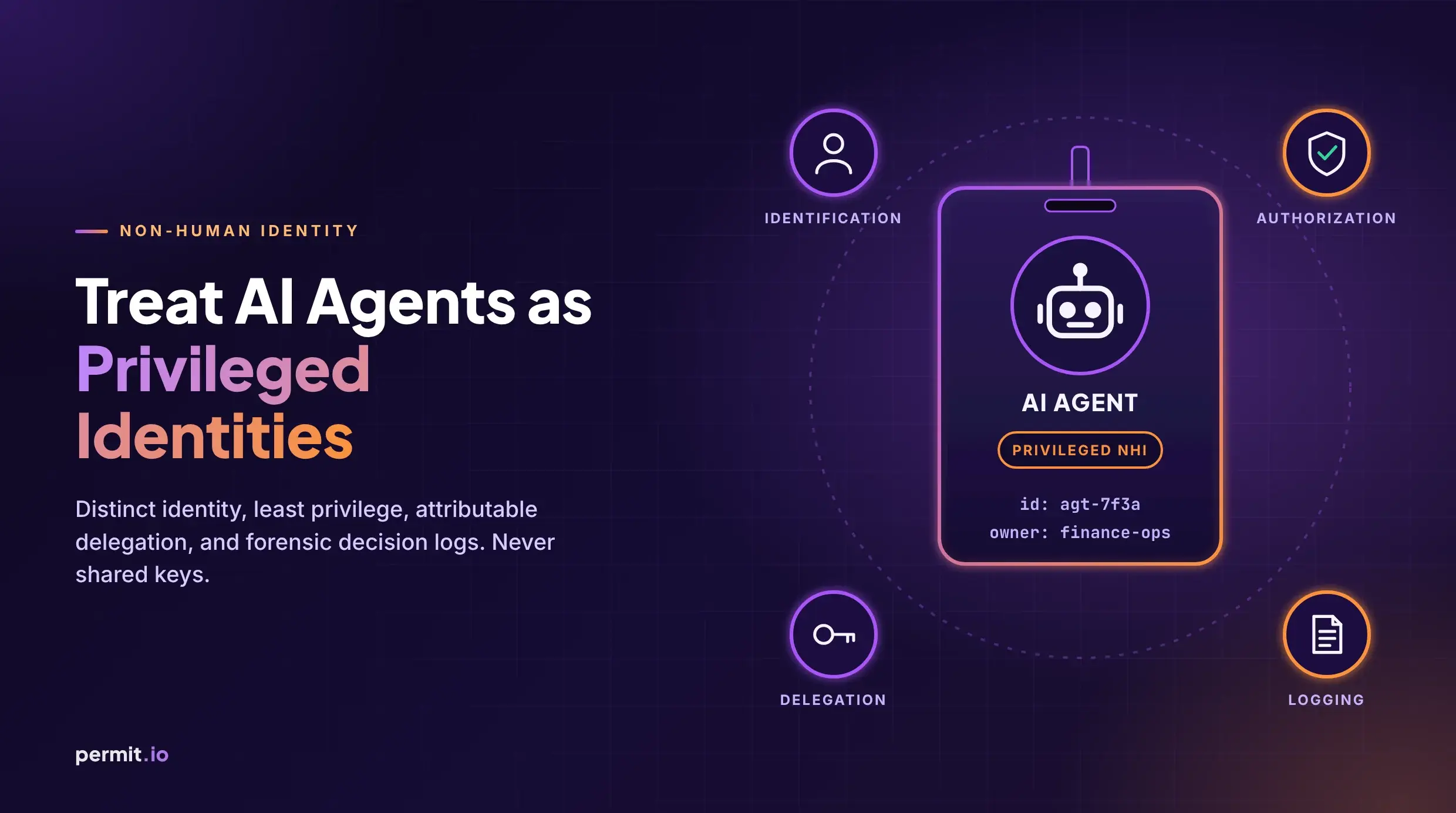
Treat AI agents as privileged NHIs: distinct identity, least privilege, attributable delegation, and forensic decision logs, not shared keys. Map to NIST NCCoE's identification · authorization · delegation · logging.
Or Weis
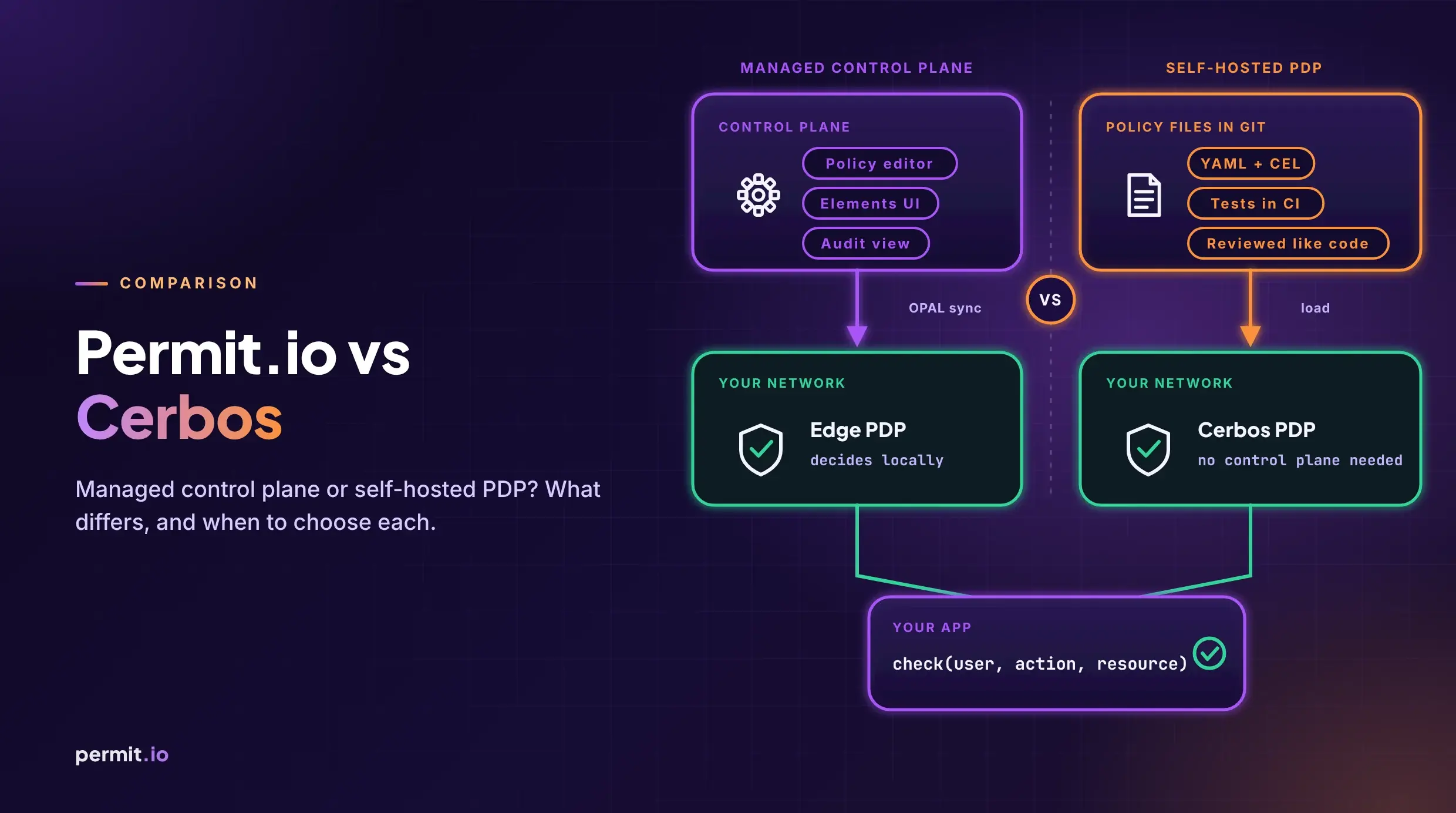
Permit.io and Cerbos can both run an open source policy decision point next to your app. A neutral comparison of managed control plane vs self-hosted PDP, with a table and when to choose each.
Or Weis
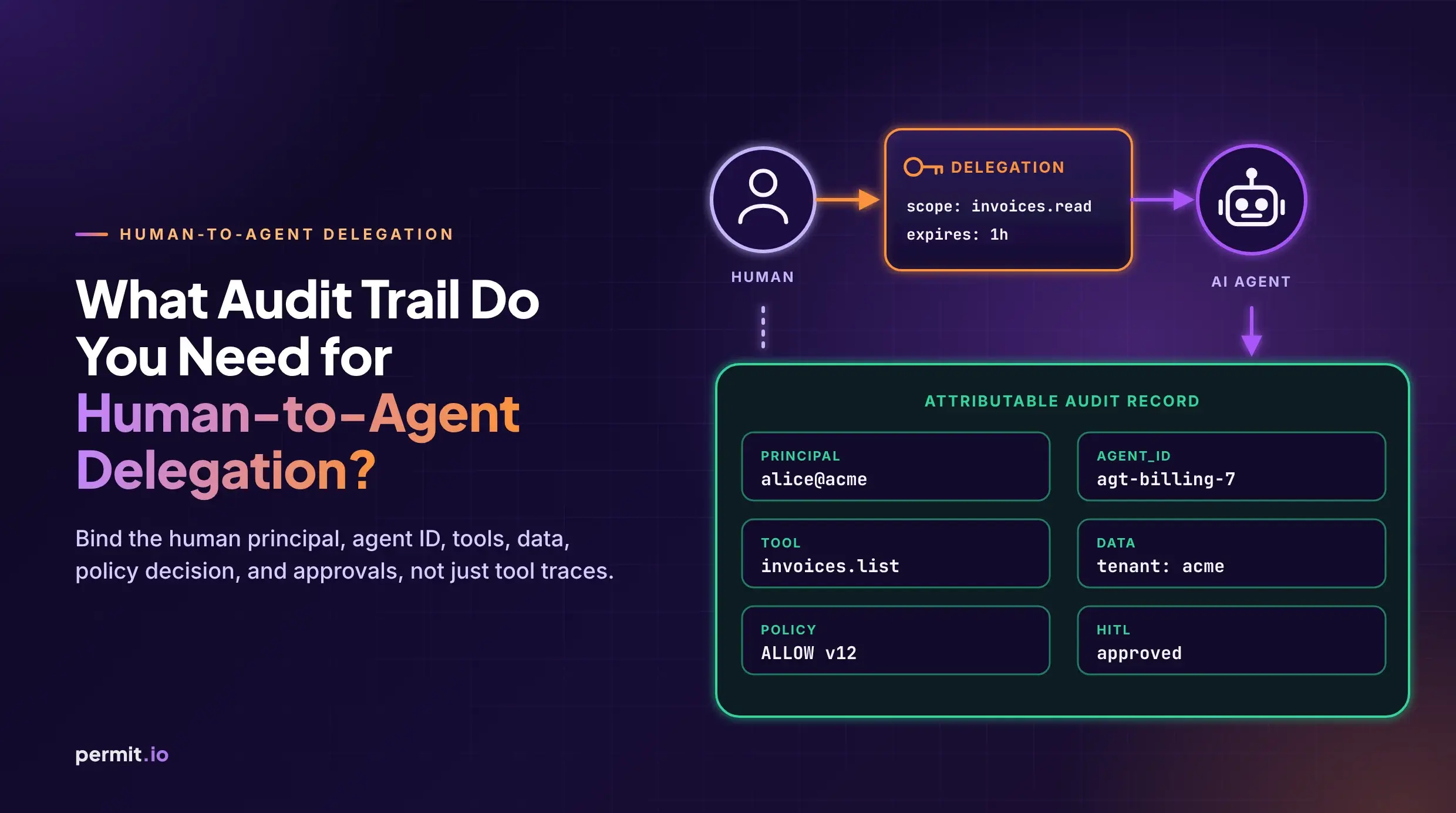
For human-to-agent delegation, bind human principal, agent ID, tools, data, policy decision, and HITL, not just tool traces, into an attributable audit trail.

Ze'ev Manilovich
A practical migration guide for teams moving from Oso Cloud to a supported authorization platform. Covers mapping Polar policy patterns to RBAC, ReBAC, and ABAC, step-by-step migration planning, and code examples.
Or Weis
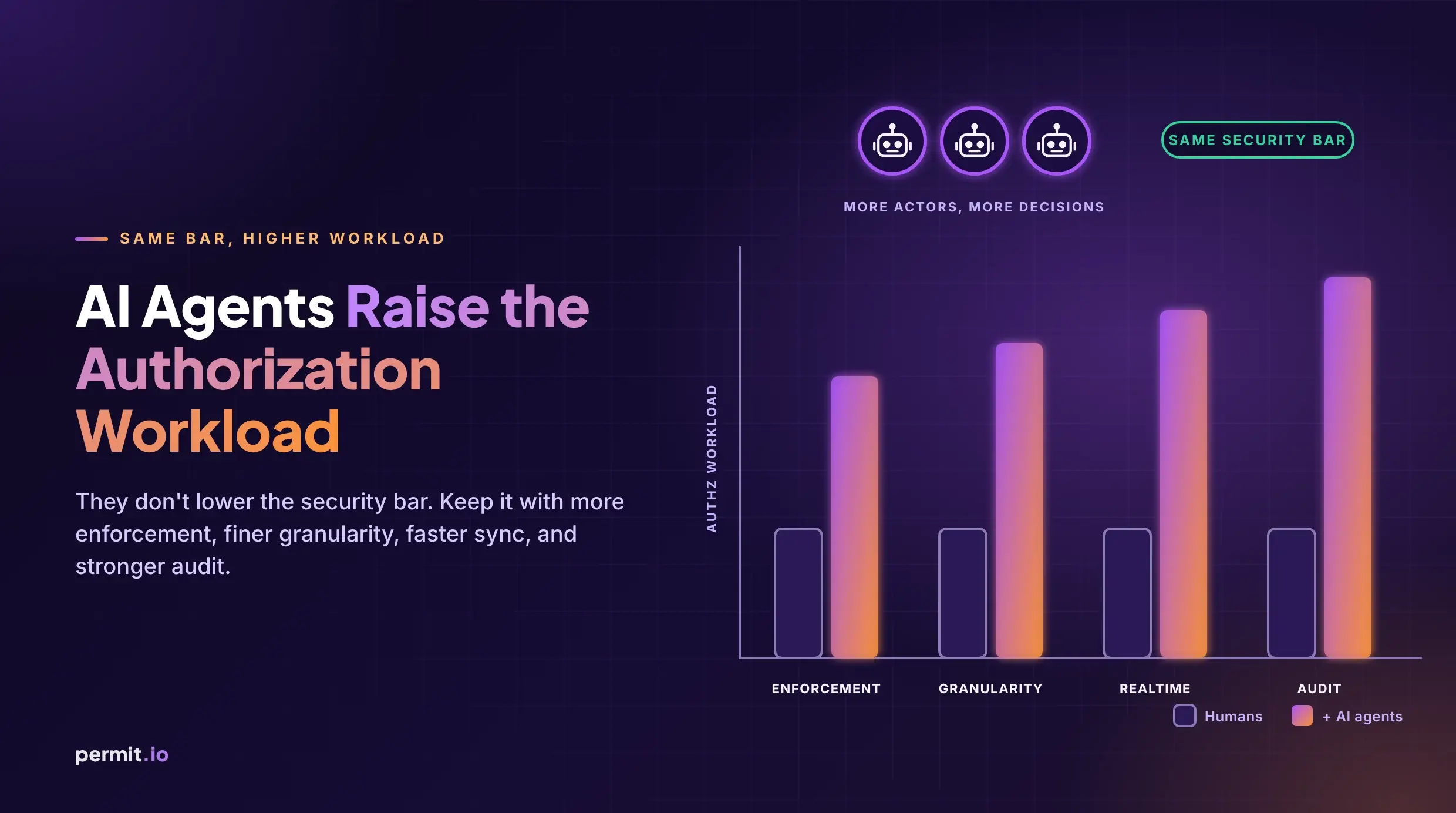
AI agents multiply the places where authorization must run. Delegation becomes a first-class part of the authorization shape: the human, the agent, the scope, the resource, conditions. Extend fine-grained authorization with per-action checks, trust ceilings, drift detection, and decision logs that explain what happened.
Or Weis
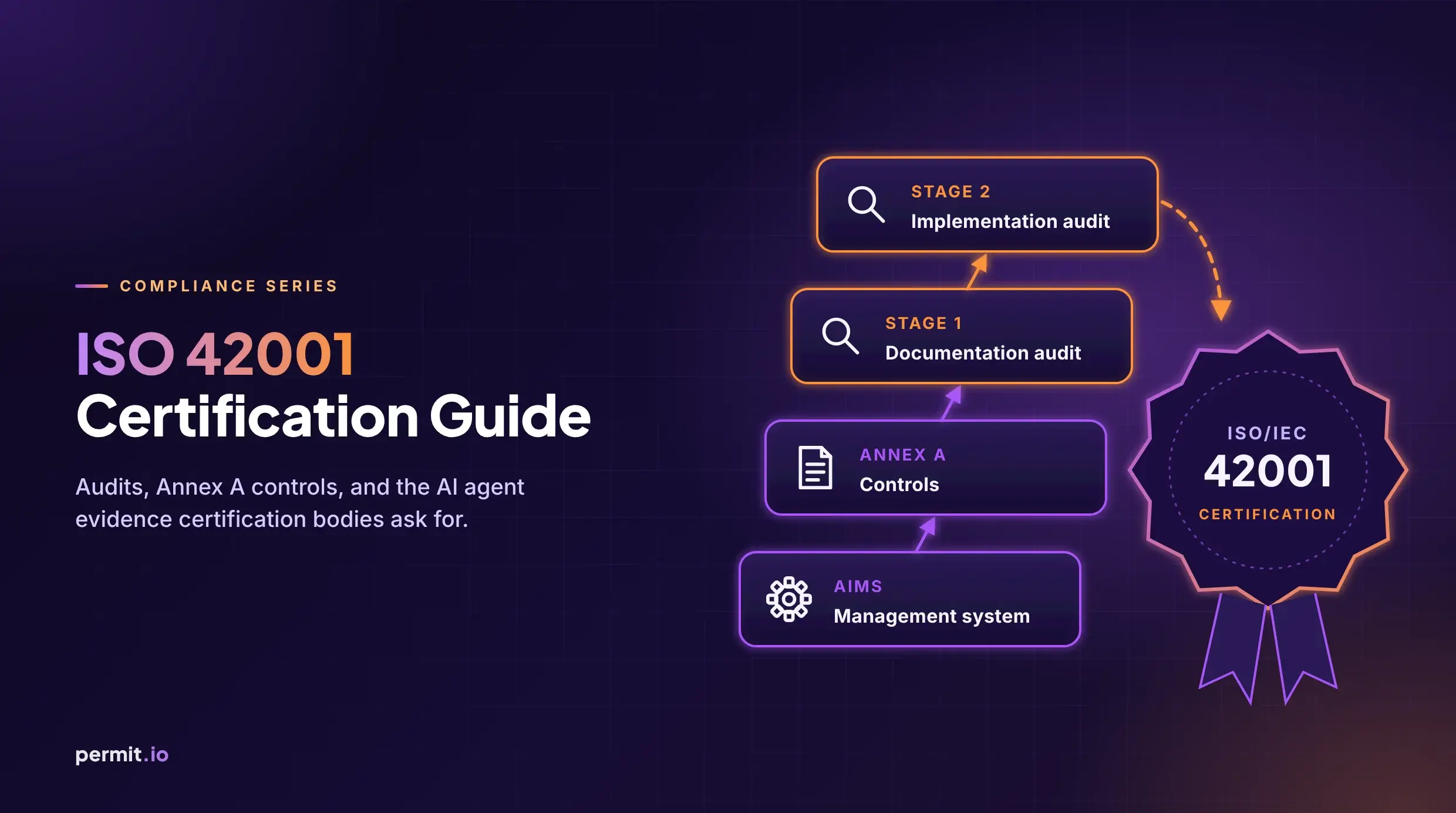
What ISO 42001 certification involves: the AI management system, accredited certification bodies, stage 1 and 2 audits, Annex A controls, and agent evidence.
Or Weis
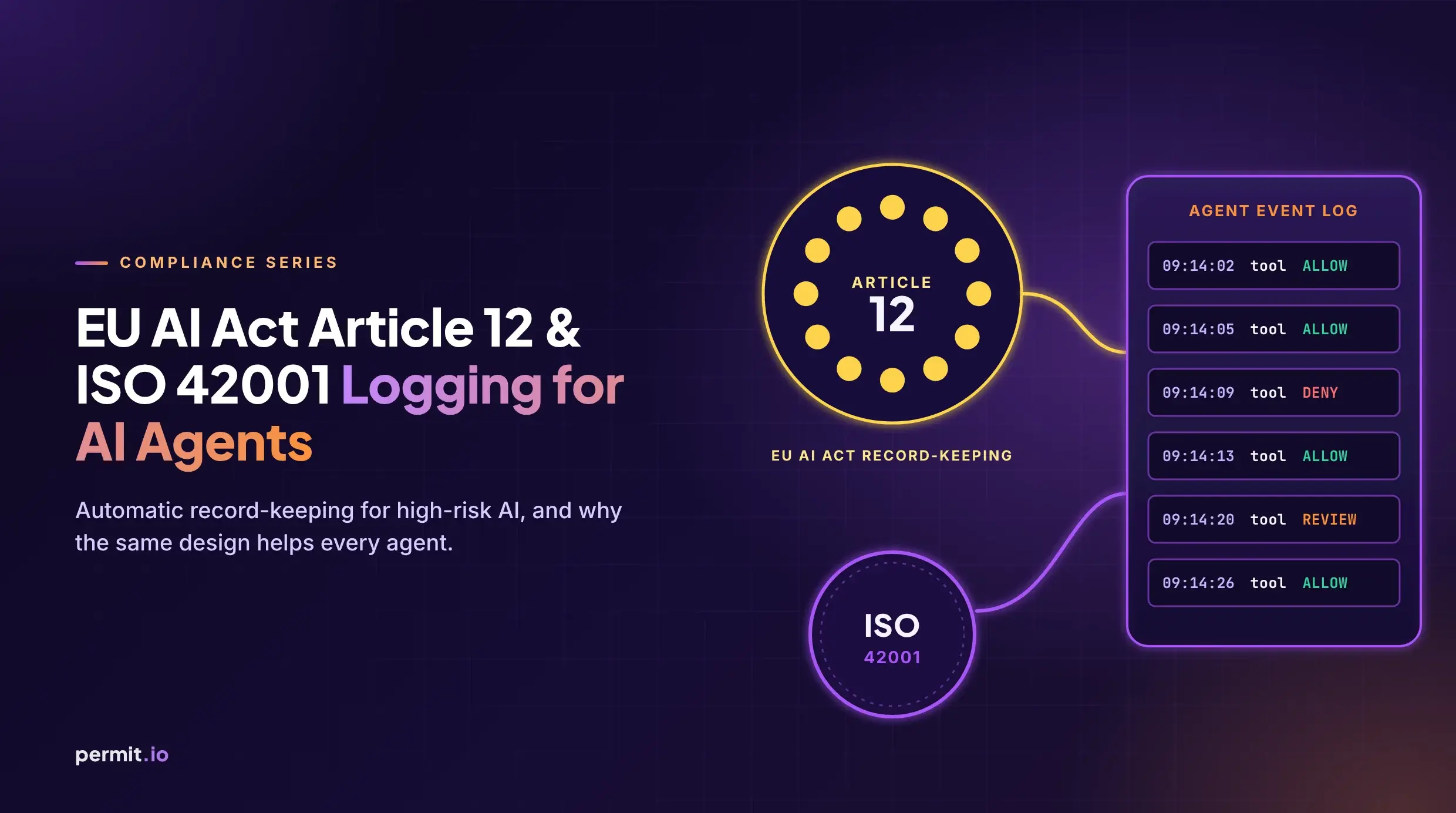
EU AI Act Article 12 record-keeping for high-risk AI, plus ISO 42001 logging, and why that design still helps non-high-risk agents.
Daniel Bass & Or Weis
Authorization as a Service provides a solution for managing user access and permissions in applications. Learn when you might want to consider such a service, how it can streamline your authorization implementation, and simplify permission management. Includes a 2026 comparison of seven leading providers.
Or Weis
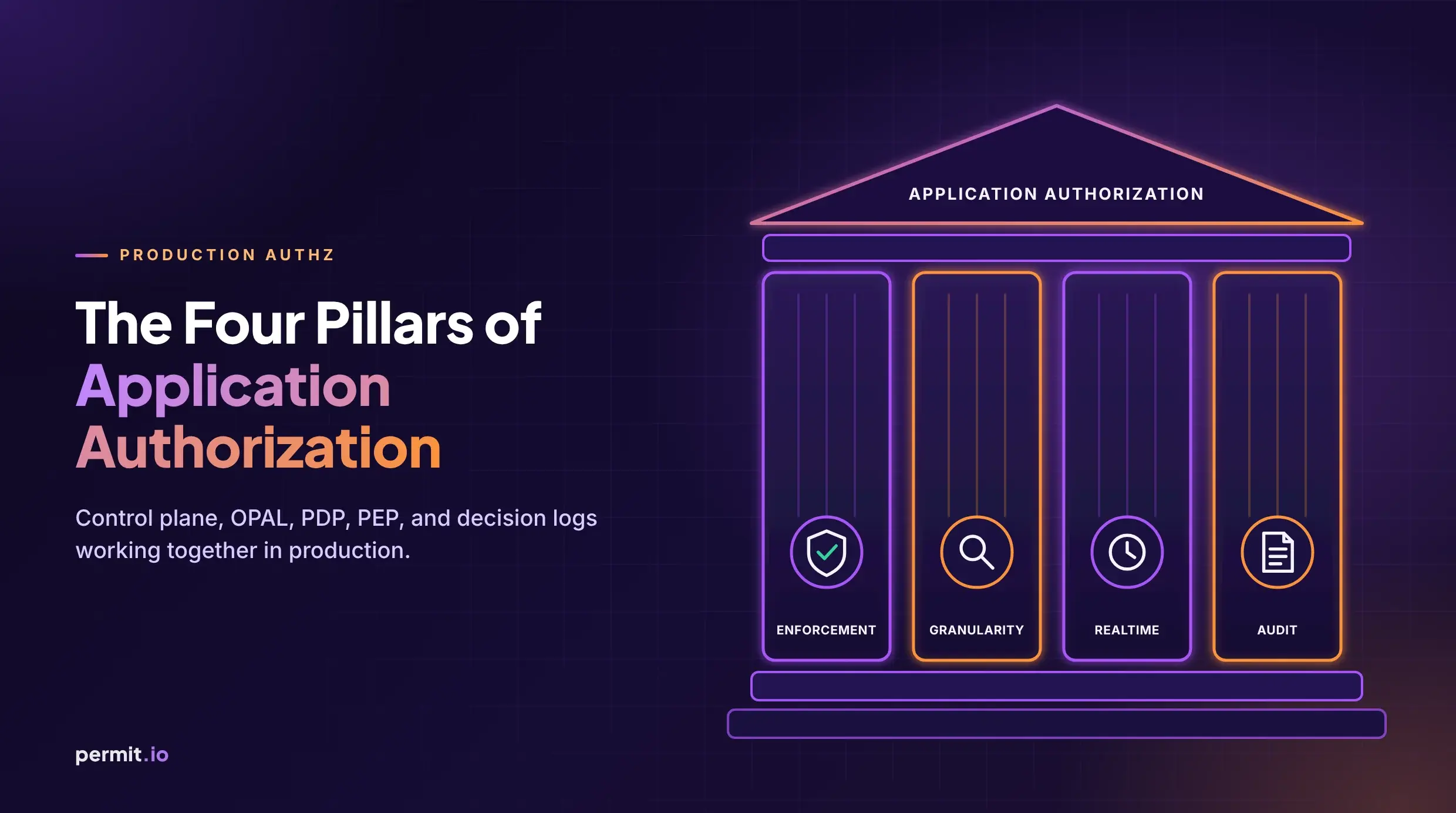
Production AuthZ needs four pillars: enforce at every sensitive action, fine grain, realtime revoke/sync, and auditable decisions. Control plane → OPAL → PDP → PEP → logs is the architecture that makes them work together.
Or Weis
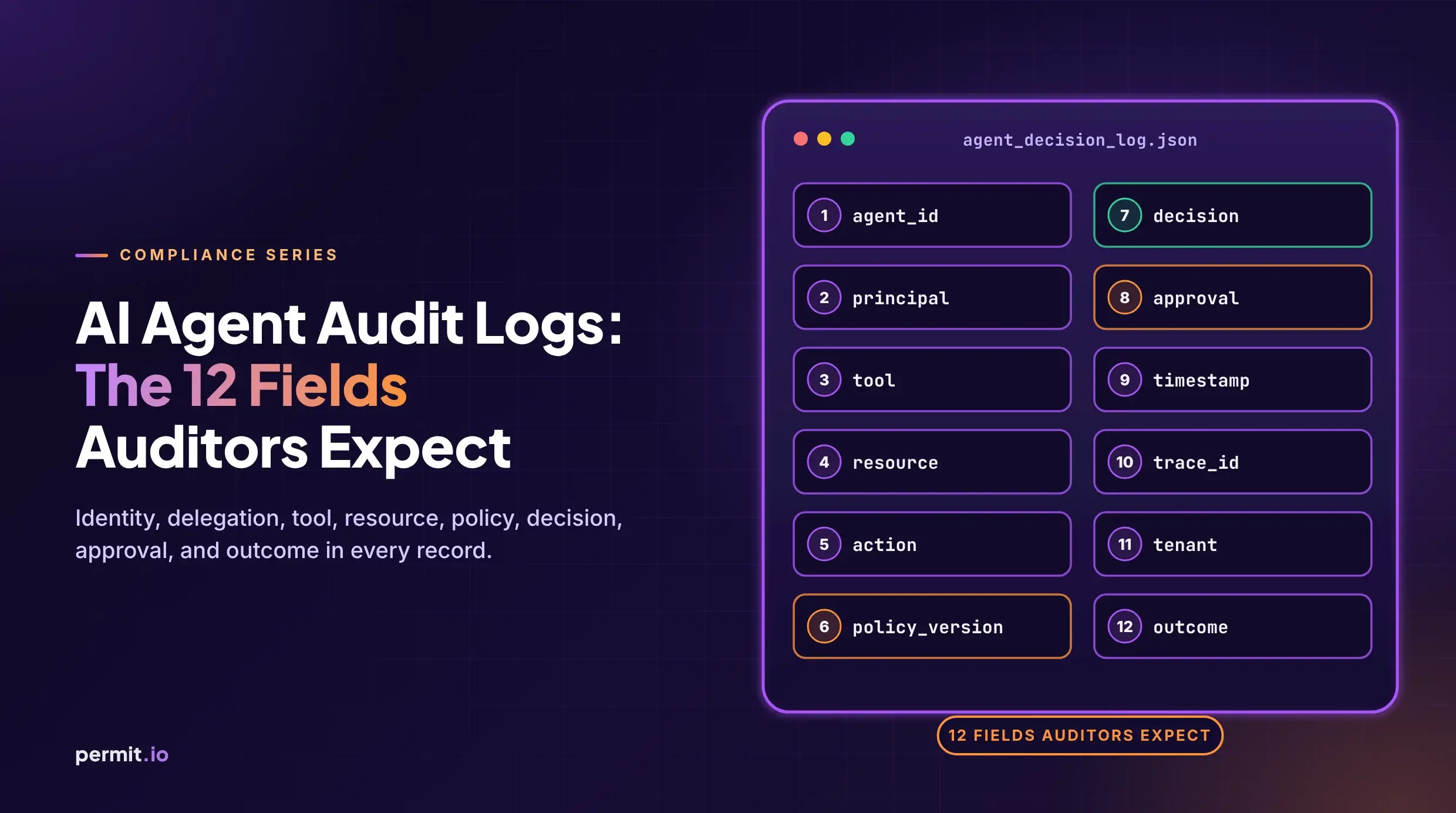
AI agent audit logs need about twelve fields: identity, delegation, tool, resource, policy, decision, HITL, and outcome.
Or Weis
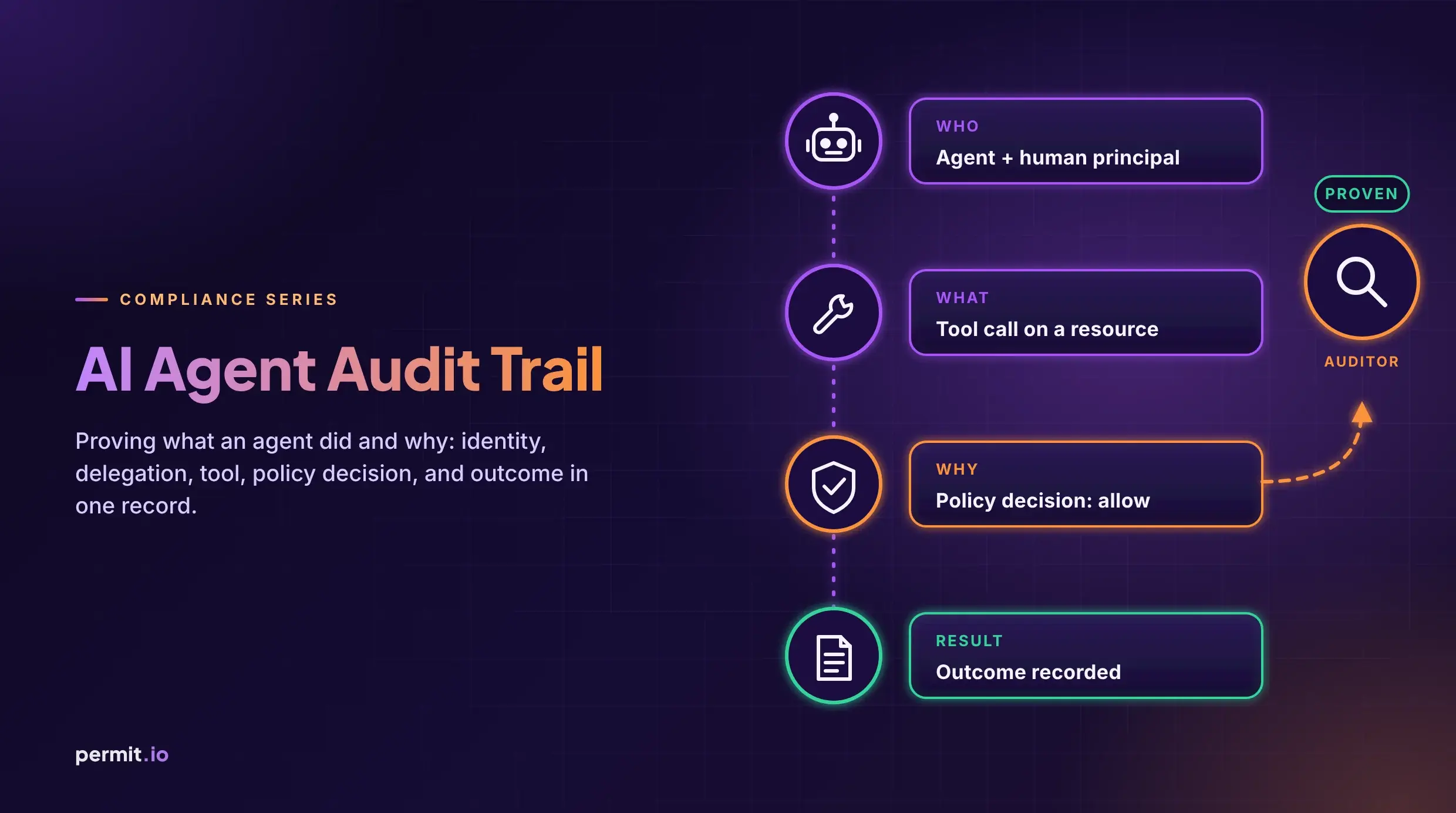
An AI agent audit trail binds identity, delegation, tool, resource, policy, allow/deny, HITL, and outcome. Tool traces are not enough.
Or Weis
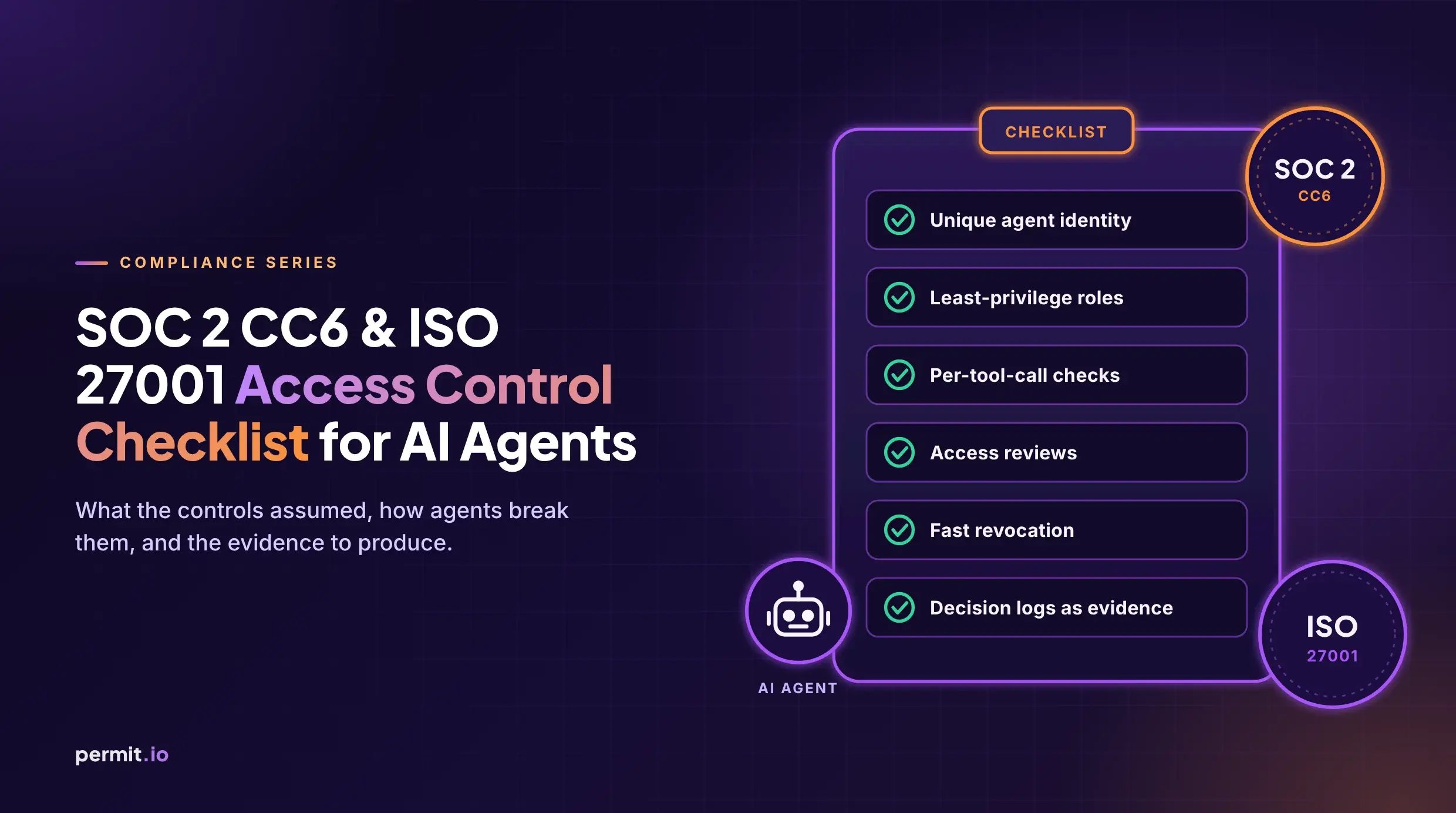
SOC 2 CC6 and ISO 27001 access control checklist for AI agents: what controls assumed, how agents break them, evidence to produce.